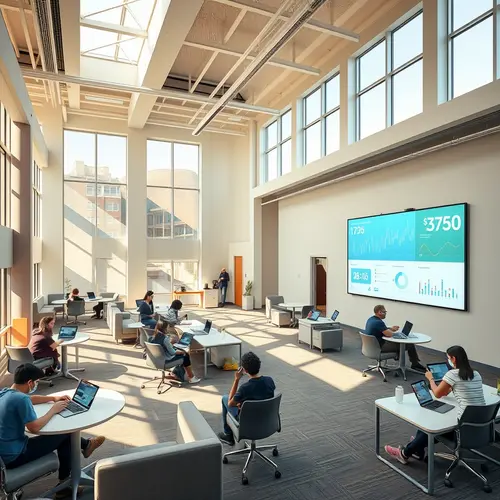
Educational Learning
Educational Learning refers to the structured process through which individuals acquire knowledge, skills, values, and competencies through formal instruction, experiential activities, and guided practice. This systematic approach combines pedagogical theory with practical application to create measurable improvements in cognitive development and real-world performance.
The field encompasses multiple methodologies backed by decades of research from institutions like the National Education Association and the American Psychological Association. Understanding these frameworks helps educators, parents, and learners optimize outcomes.
Core Principles Behind Effective Educational Learning
Successful learning systems share fundamental characteristics. They prioritize active engagement over passive consumption. They adapt to individual cognitive styles and learning paces.
Research from Stanford’s Graduate School of Education demonstrates that retention rates spike when learners participate in hands-on activities rather than lecture-only formats. The constructivist approach, championed by educational theorists, emphasizes building new understanding upon existing knowledge frameworks.
Neuroplasticity research reveals that repeated practice with immediate feedback creates stronger neural pathways. This biological reality underpins why spaced repetition and deliberate practice consistently outperform cramming techniques.
The Science of Knowledge Retention
Memory consolidation requires specific conditions. The testing effect shows that retrieving information strengthens retention more effectively than re-reading material. According to cognitive psychology research, learners who self-test retain approximately 50% more information than those who simply review notes.
Sleep plays an underappreciated role. Studies published in psychological science journals confirm that REM sleep helps transfer information from short-term to long-term memory storage.
7 Proven Methods Within Educational Learning Systems
Different approaches serve different learning objectives. Understanding these distinctions allows for strategic application.
1. Direct Instruction
This teacher-centered method provides explicit guidance through structured lessons. The instructor models skills, provides guided practice, then transitions to independent work. It excels for foundational skill-building and procedural knowledge.
Data from educational research indicates direct instruction produces strong results for basic literacy and numeracy. The approach follows a clear sequence: demonstration, practice, feedback, mastery.
2. Inquiry-Based Learning
Students drive their own discovery through questions and investigation. Rather than receiving answers, they formulate hypotheses and test them through research or experimentation.
This method develops critical thinking and problem-solving abilities. The National Science Teachers Association advocates for inquiry approaches in STEM education because they mirror authentic scientific processes.
3. Collaborative Learning
Peer interaction accelerates understanding through discussion, debate, and shared problem-solving. Social constructivist theory explains how articulating ideas to others deepens personal comprehension.
Group projects, peer tutoring, and cooperative tasks create accountability while building communication skills. Educational psychology research shows that explaining concepts to others activates deeper processing levels.
4. Experiential Learning
Learning through direct experience creates powerful memory anchors. Internships, laboratory work, simulations, and field studies provide context that abstract instruction cannot match.
David Kolb’s experiential learning cycle demonstrates how concrete experience, reflective observation, abstract conceptualization, and active experimentation create comprehensive understanding.
5. Differentiated Instruction
This approach recognizes that learners have varied readiness levels, interests, and learning profiles. Teachers modify content, process, or product based on individual needs.
Universal Design for Learning (UDL) principles guide this customization. Multiple means of representation, expression, and engagement ensure accessibility for diverse learners.
6. Mastery-Based Learning
Students progress only after demonstrating competency at each level. This contrasts with time-based advancement where everyone moves forward regardless of understanding.
Mastery approaches prevent knowledge gaps from compounding. Research from competency-based education programs shows higher long-term retention and application rates.
7. Technology-Enhanced Learning
Digital tools provide personalized pacing, immediate feedback, and adaptive difficulty levels. Platforms analyze performance data to identify struggling areas and adjust accordingly.
However, technology serves as an amplifier, not a replacement. Effective Educational Learning integrates digital resources with human guidance and social interaction.
Common Misconceptions About Educational Learning
One persistent myth claims that people have fixed “learning styles” like visual, auditory, or kinesthetic. Extensive research has debunked this notion. While people may prefer certain modalities, they learn best through multimodal instruction regardless of preference.
Another outdated belief suggests that difficult, frustrating learning experiences produce better retention. Evidence shows the opposite. Moderate challenge with attainable goals optimizes engagement and persistence. Excessive difficulty triggers stress responses that inhibit memory formation.
Measuring Success in Educational Learning Programs
Assessment extends beyond traditional testing. Comprehensive evaluation includes formative checks during instruction, not just summative tests after completion.
Authentic assessment measures real-world application through portfolios, presentations, and performance tasks. These reveal deeper understanding than multiple-choice questions.
| Assessment Type | Purpose | Best Application |
|---|---|---|
| Diagnostic | Identify prior knowledge and gaps | Before instruction begins |
| Formative | Monitor progress and adjust teaching | Throughout the learning process |
| Summative | Evaluate final achievement | End of unit or course |
| Performance-Based | Demonstrate practical application | Complex skills and competencies |
Implementing Effective Educational Learning Strategies
Practical application requires planning and iteration. Start by defining clear learning objectives using measurable language. What should learners know, do, or create by the end?
Design backward from those outcomes. Select instructional methods that align with objectives. Procedural skills benefit from direct instruction and practice. Complex problem-solving needs inquiry and experiential approaches.
Creating Optimal Educational Learning – Environments
Physical and psychological safety enable risk-taking and engagement. Learners need permission to make mistakes without judgment. Growth mindset cultures emphasize effort and progress over innate ability.
Environmental factors matter more than many realize. Proper lighting, temperature control, and ergonomic seating reduce cognitive load. Background noise impairs concentration and working memory capacity.
The Role of Metacognition
Teaching learners to monitor their own thinking amplifies effectiveness. Metacognitive strategies include planning approaches before tasks, monitoring comprehension during work, and evaluating performance afterward.
Students who develop metacognitive awareness become self-directed learners. They identify when strategies work and when to try alternatives. This skill transfers across domains and disciplines.
Educational Learning: The Spacing Effect
One underutilized principle deserves special attention. Distributed practice outperforms massed practice by substantial margins. Spacing study sessions over time with intervals between creates stronger retention than concentrating study into single blocks.
This contradicts common cramming habits but aligns with memory consolidation research. The brain needs time to process and integrate new information with existing schemas. Immediate repetition provides diminishing returns compared to spaced review.
Educational institutions should structure curricula with spiraling review rather than “one-and-done” units. Concepts revisited at increasing intervals achieve lasting mastery.
Key Takeaways for Maximizing Educational Learning
- Match instructional methods to specific learning objectives and content types
- Incorporate active retrieval practice rather than passive review
- Provide immediate, specific feedback that guides improvement
- Space learning over time with strategic review intervals
- Create psychologically safe environments that encourage experimentation
- Use multimodal instruction regardless of perceived learning style preferences
- Develop metacognitive awareness to foster self-directed learning
- Measure understanding through varied assessment types beyond testing
Building Sustainable Educational Learning – Habits
Long-term success requires systems, not motivation alone. Habit formation research shows that consistent routines performed in specific contexts become automatic over time.
Link new learning behaviors to existing habits. Study after morning coffee. Review flashcards during commute time. Environmental cues trigger these behaviors without requiring willpower.
Start small with achievable commitments. Fifteen minutes of focused practice beats sporadic marathon sessions. Consistency compounds over weeks and months into substantial expertise.
Educational Learning represents a deliberate, evidence-based approach to knowledge acquisition and skill development. By understanding cognitive science principles, applying proven methodologies, and creating supportive environments, educators and learners achieve outcomes that passive approaches cannot match. The strategies outlined here provide a foundation for anyone seeking to optimize their learning systems or instructional design.
About the Author