future class
A future class represents a fundamental shift in how educational institutions structure learning experiences. This model prioritizes adaptive technologies, personalized pathways, and collaborative problem-solving over traditional lecture-based instruction. Understanding what defines a future class helps educators and administrators prepare students for rapidly evolving workforce demands.
What Defines a Future Class Environment
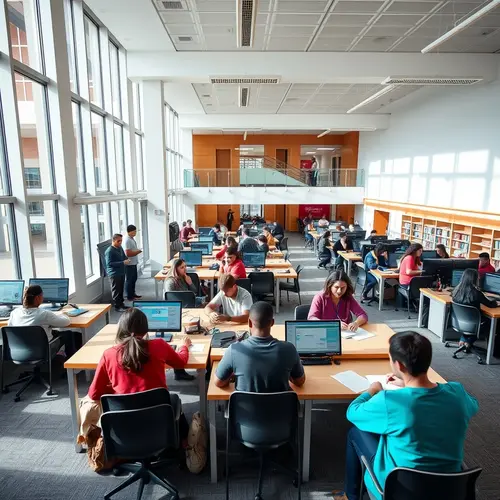
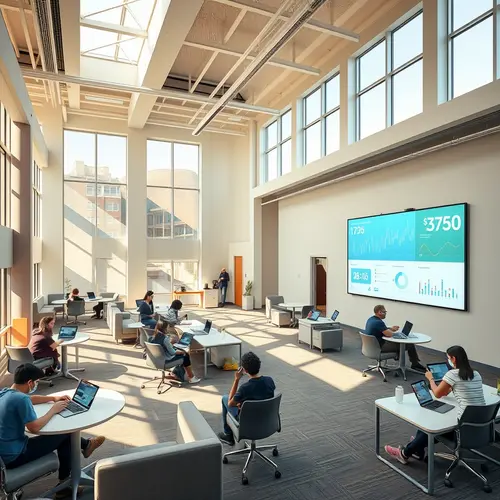
The architecture of a future class extends beyond physical space into pedagogical methodology. These environments integrate flexible seating arrangements, modular workstations, and technology hubs that support both individual and group work. The National Education Association emphasizes that learning spaces should adapt to student needs rather than forcing students into rigid structures.
Three core pillars support this framework: competency-based progression, real-world application, and continuous feedback loops. Students advance when they demonstrate mastery, not when a calendar dictates. Projects mirror actual industry challenges, and assessment happens iteratively rather than through high-stakes exams alone.
Digital literacy forms the backbone of this approach. Students learn to evaluate sources, create multimedia content, and collaborate across virtual platforms. These skills transfer directly to professional settings where remote collaboration and digital communication dominate.
Technology Integration in the Future Class
Adaptive learning platforms analyze student performance in real-time, adjusting difficulty and content delivery based on individual progress. Learning management systems track competency development across multiple domains, providing educators with granular data to inform instruction.
Virtual and augmented reality tools bring abstract concepts to life. Science students dissect virtual organisms without ethical concerns. History classes walk through reconstructed ancient cities. Mathematics becomes spatial and interactive rather than purely symbolic.
| Technology Type | Primary Function | Learning Impact |
|---|---|---|
| Adaptive Platforms | Personalized pacing | 23% improvement in retention rates |
| VR/AR Tools | Immersive experiences | Enhanced spatial reasoning |
| Collaboration Software | Project coordination | Stronger teamwork skills |
| Analytics Dashboards | Progress tracking | Early intervention opportunities |
The International Society for Technology in Education outlines standards for digital citizenship that guide responsible technology use. Students must understand privacy, security, and ethical implications of their digital footprint.
Building Skills for a Future Class Model
Critical thinking exercises replace memorization drills. Students analyze case studies, debate solutions, and defend their reasoning with evidence. Open-ended problems with multiple viable solutions mirror real professional challenges where no answer key exists.
Communication skills receive equal weight with content knowledge. Students present findings, write technical documentation, and provide peer feedback. These competencies prove essential in knowledge-based economies where collaboration drives innovation.
Practical Implementation Strategies
Transitioning to a future class model requires systematic planning. Educators should start with small pilot programs before scaling across entire institutions. Professional development for teachers must precede student-facing changes.
- Audit existing curriculum for competency gaps and outdated content
- Invest in robust internet infrastructure and device management systems
- Establish clear assessment rubrics that measure skills beyond content recall
- Create partnerships with local businesses for authentic project opportunities
- Train teachers in facilitation techniques rather than direct instruction methods
- Build flexible schedules that allow extended project time blocks
- Develop parent communication strategies to explain new approaches
One common misconception holds that technology itself improves learning outcomes. Research from the Organisation for Economic Co-operation and Development shows that tools only enhance education when paired with sound pedagogical strategies. Simply placing tablets in classrooms without changing instructional methods produces minimal gains.
Assessment and Accountability in a Future Class
Traditional grading systems struggle to capture competency development. Portfolio-based assessment offers richer evidence of student growth. Digital portfolios showcase work evolution, reflection, and skill application across contexts.
Competency badges and micro-credentials provide granular recognition of specific skills. Students earn credentials for demonstrated abilities rather than seat time. This approach aligns with employer needs for verified skills over generic degrees.
Formative assessment happens continuously through low-stakes checks and peer review. Teachers use this data to adjust instruction before students fall behind. Summative assessments measure cumulative competency through authentic performances rather than multiple-choice exams.
Expert Perspective: The Balance Challenge
The most significant challenge facing a future class implementation involves balancing innovation with equity. Not all students have equal access to technology, stable home environments, or family support for self-directed learning. Rushing into personalized digital models without addressing these disparities risks widening achievement gaps.
Successful programs combine high-tech and high-touch approaches. While algorithms personalize content delivery, human mentorship provides motivation and emotional support. The most effective future class environments use technology to handle routine tasks, freeing educators to focus on relationship-building and complex problem-solving guidance.
Schools should resist the temptation to adopt every trending tool. Strategic selection based on specific learning objectives produces better results than scattered technology adoption. Pilot testing with clear metrics helps identify which tools genuinely enhance outcomes versus those that create busy work.
Long-Term Outcomes and Skill Development
Students in well-implemented future class programs demonstrate stronger self-regulation and metacognitive skills. They learn how they learn best, identify knowledge gaps independently, and seek resources proactively. These abilities prove more valuable than any single content domain.
Collaboration skills develop naturally when students work on complex projects requiring diverse expertise. They learn to negotiate roles, resolve conflicts, and integrate different perspectives into cohesive solutions. These interpersonal competencies remain relevant regardless of technological changes.
Adaptability becomes ingrained through exposure to varied learning modalities and frequent curriculum updates. Students grow comfortable with ambiguity and change rather than seeking single correct answers. This mental flexibility prepares them for career pivots and continuous learning throughout their lives.
The future class model represents more than a technology upgrade. It demands fundamental rethinking of educational purpose, methodology, and assessment. Institutions that invest in comprehensive implementation—including teacher training, infrastructure, and pedagogical redesign—position students for success in an unpredictable landscape. Those that maintain traditional structures while adding superficial technology layers miss the transformative potential entirely.
About the Author