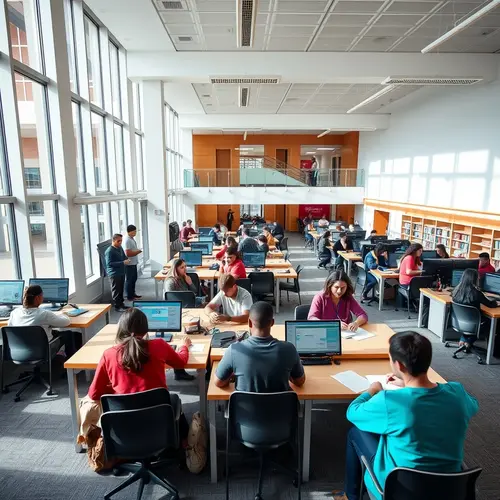
Every generation carries hidden brilliance. It often appears quietly—inside classrooms, libraries, late-night study sessions, and moments of doubt. For the high school scholar, achievement is not merely about grades or accolades. It is about direction. About discovering that learning can be empowering, humane, and deeply transformative.
Yet many students feel overwhelmed. Expectations pile up. Comparisons grow louder. The path forward can seem unnecessarily complex. This is where clarity becomes a gift. When education is simplified without being diluted, confidence rises. Motivation stabilizes. Dreams become actionable.
This guide exists to illuminate that path—gently, practically, and purposefully.
Understanding the Real Advantage of Being a high school scholar
Education Beyond the Transcript
Academic success is often reduced to numbers. GPA. Rankings. Test scores. But the true advantage of a high school scholar lies elsewhere—in mindset, adaptability, and cultivated curiosity.
Consider two students with similar grades. One memorizes. The other understands. One reacts. The other reflects. Over time, the reflective learner gains momentum. They ask better questions. They make informed decisions. They grow resilient.
This distinction matters because modern education rewards depth, not just speed.
The Shift From Pressure to Purpose
Pressure-driven learning exhausts students. Purpose-driven learning sustains them.
A high school scholar who understands why they learn develops intrinsic motivation. They are more likely to:
-
Explore subjects beyond requirements
-
Seek mentorship
-
Build meaningful extracurricular profiles
-
Persist through academic setbacks
Purpose turns effort into energy.
Building a Strong, Sustainable Learning Identity
The Core Habits That Empower the high school scholar
1. Strategic Curiosity
Curiosity is not accidental. It is trained.
A thriving high school scholar learns to connect subjects. History informs literature. Mathematics supports science. Writing sharpens thinking across all disciplines.
Example:
A student interested in environmental science strengthens their profile by excelling in biology, writing persuasive essays on climate policy, and joining data-driven research clubs. Compared to a student who only focuses on one subject, this integrated approach creates intellectual gravity.
2. Consistency Over Intensity
Late-night cramming is dramatic—but unreliable. Sustainable success is built on rhythm.
The high school scholar who studies 60–90 minutes daily often outperforms peers who study sporadically for longer hours. Consistency protects mental health and improves retention.
Comparison:
-
Intensive approach: High stress, short memory span
-
Consistent approach: Calm focus, long-term mastery
3. Feedback as a Growth Instrument
Feedback is not criticism. It is guidance.
A confident high school scholar actively seeks feedback from teachers, peers, and mentors. They revise essays. They retake practice exams. They treat mistakes as data—not as verdicts.
This mindset creates academic elasticity, a rare but powerful advantage.
Navigating Academic Choices With Confidence
Smart Decision-Making for the high school scholar
Course Selection With Intention
Advanced courses matter—but alignment matters more.
A high school scholar benefits most when course difficulty aligns with capacity and aspiration. Overloading leads to burnout. Under-challenging leads to stagnation.
Balanced strategy:
-
Core strength subjects at advanced levels
-
Supporting subjects at standard or honors levels
-
One exploratory elective each year
This balance demonstrates both ambition and self-awareness.
Extracurricular Depth vs. Breadth
Colleges increasingly value depth of commitment.
A high school scholar who spends three years leading one organization often stands out more than someone who joins ten clubs briefly.
Example comparison:
-
Student A: Member of 8 clubs, no leadership
-
Student B: 3-year debate team leader, community impact projects
Student B shows narrative coherence—a compelling educational story.
Emotional Intelligence: The Silent Academic Multiplier
Resilience Is Learned, Not Inherited
Setbacks are inevitable. A failed test. A rejected application. A missed opportunity.
What defines the high school scholar is response, not avoidance. Resilient students recalibrate. They seek support. They persist without self-blame.
Schools reward this quietly. Teachers notice. Counselors advocate. Opportunities reopen.
Managing Comparison Fatigue
Social media amplifies unrealistic success narratives. The high school scholar learns to measure progress internally, not socially.
A powerful reframe:
Progress is personal. Mastery is invisible at first.
This internal compass preserves confidence and focus.
Preparing for the Future Without Fear
Long-Term Vision for the high school scholar
College and Career Readiness as a Continuum
Preparation is not a senior-year sprint. It is a multi-year cultivation.
A forward-thinking high school scholar:
-
Documents achievements early
-
Builds relationships with mentors
-
Reflects annually on goals and interests
This approach reduces anxiety and improves decision quality.
Skill Literacy Over Credential Obsession
The future favors adaptable thinkers.
Beyond diplomas, the high school scholar develops:
-
Analytical writing
-
Data interpretation
-
Public speaking
-
Ethical reasoning
These competencies outlast any single exam or institution.
Turning Insight Into Confident Momentum
Practical Steps Every high school scholar Can Start Today
-
Weekly Reflection (15 minutes):
What worked? What didn’t? What will improve next week? -
One Mentor Conversation per Month:
Teacher, counselor, or community leader. -
Skill Audit Each Semester:
Identify one academic and one personal skill to strengthen. -
Purpose Statement Draft:
A one-paragraph articulation of interests, values, and goals—revised annually.
These small, deliberate actions compound.
Achievement Does Not Need to Be Complicated
The journey of a high school scholar is not about perfection. It is about alignment—between effort and intention, ambition and well-being.
When education is approached with care, clarity, and courage, achievement becomes less intimidating and more inevitable.
Progress unfolds. Confidence grows quietly. And success, once distant, begins to feel deserved.
The advantage was always there. It simply needed direction.
About the Author